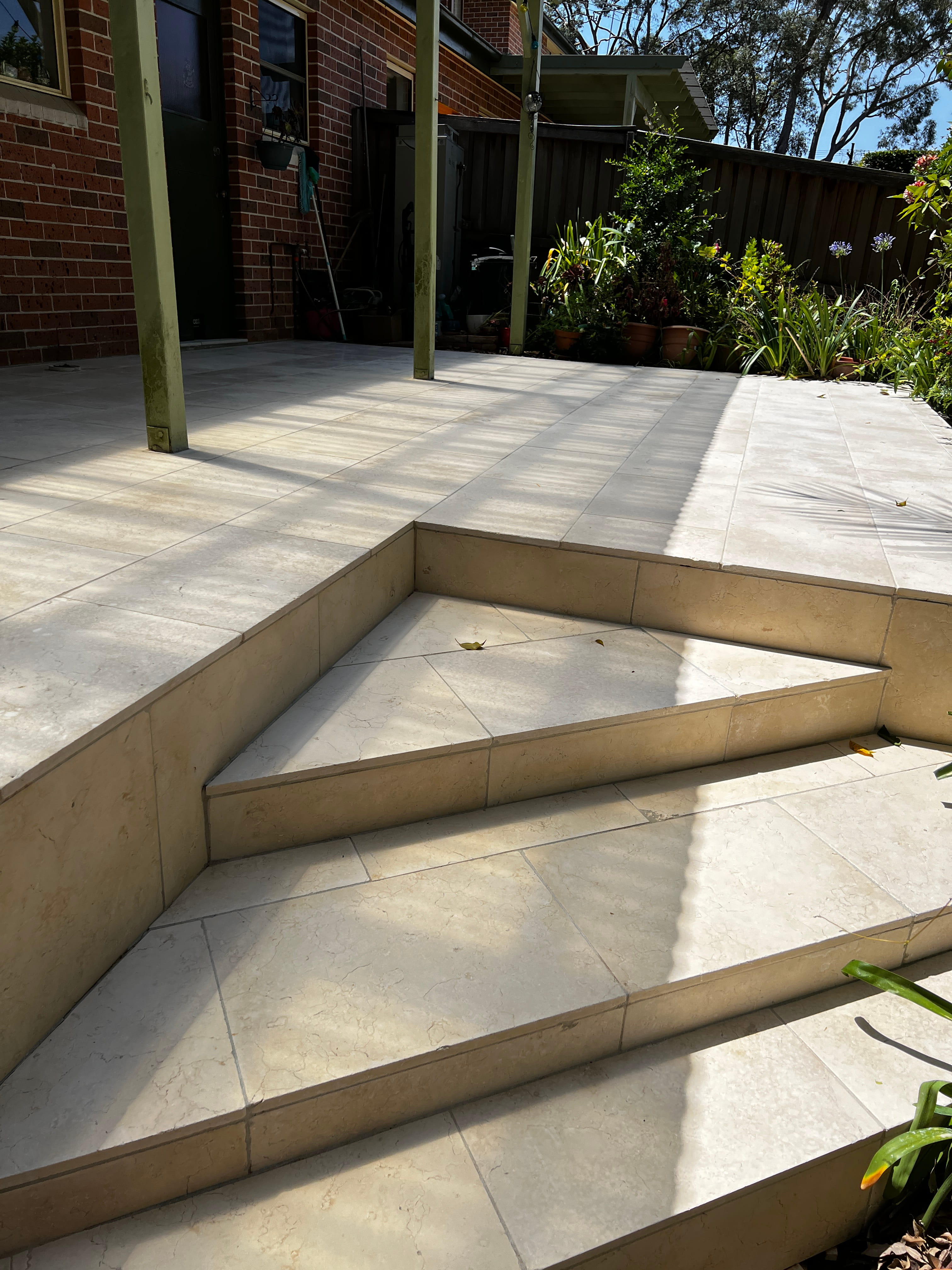
Natural stone is widely used throughout Sydney homes for flooring, bathrooms, kitchen benchtops, outdoor paving, patios, and swimming pool surrounds.
Marble, limestone, travertine, sandstone, and granite each have different characteristics, including variations in hardness, porosity, and moisture absorption.
One of the most common questions homeowners ask is how frequently natural stone should be sealed.
The answer depends on the type of stone, its location, environmental exposure, maintenance practices, and the sealer previously applied.
What Does a Penetrating Stone Sealer Do?
A penetrating stone sealer is designed to absorb into suitable porous materials and reduce the absorption of water and staining substances.
Unlike topical coatings, penetrating sealers generally do not create a visible film over the stone.
They help reduce the likelihood of staining while preserving the natural appearance of the surface.
However, penetrating sealers do not make natural stone completely waterproof or stain-proof.
They also do not prevent scratches or acid etching.
How Often Should Outdoor Natural Stone Be Resealed?
Outdoor stone is exposed to rain, sunlight, temperature changes, organic debris, and everyday use.
These conditions can affect the performance of protective treatments over time.
For many exposed outdoor natural stone surfaces in Sydney, we recommend assessing the condition of the sealer and considering professional cleaning and resealing approximately every 18–24 months.
This is a general maintenance recommendation rather than a fixed lifespan for every product or installation.
Actual resealing intervals depend on the stone's porosity, exposure, use, and sealing system.
Does Marble Need Regular Sealing?
Many marble surfaces benefit from a suitable penetrating sealer, particularly where the stone is absorbent and exposed to staining substances.
However, not every marble requires the same treatment frequency.
A polished marble benchtop may have different sealing requirements from a honed marble bathroom floor.
The stone's absorption characteristics and previous treatment history should be assessed before resealing.
How Often Should Limestone Be Sealed?
Limestone is often relatively porous and can benefit from penetrating sealing.
Outdoor limestone paving may require more frequent maintenance assessments than limestone installed in protected interior spaces.
The appropriate interval depends on environmental exposure, foot traffic, cleaning methods, and the selected sealing product.
Does Travertine Need Sealing?
Travertine can absorb moisture and staining substances, depending on its porosity and surface finish.
Both indoor and outdoor travertine may benefit from professional sealing.
Outdoor pool surrounds and patios should be assessed periodically because they are exposed to water, environmental contamination, and regular use.
Does Sandstone Need Sealing?
Sandstone is often highly porous and can absorb significant amounts of water and other liquids.
Professional penetrating sealing can help reduce moisture absorption and the likelihood of staining.
However, sandstone can vary considerably in hardness, mineral composition, and porosity.
An appropriate sealing system should be selected according to the stone and site conditions.
How Can You Tell Whether Stone Needs Resealing?
Possible indications that a stone surface requires assessment include:
- Water absorbing more readily than previously
- Increasing susceptibility to staining
- Uneven absorption across the surface
- Loss of previously observed water repellency
- A history of harsh chemical cleaning or heavy wear
A controlled water absorption test may provide useful information, but water beading alone is not a definitive measure of sealer performance.
Professional assessment is the most reliable way to determine whether resealing is appropriate.
Should Stone Be Cleaned Before Sealing?
Yes.
Existing contamination should be removed before applying a new sealing product.
Professional cleaning may involve stone-safe alkaline treatments, mechanical cleaning, stain treatment, or additional restoration methods depending on the condition of the stone.
The surface must also be sufficiently dry and suitable for the selected sealer.
Sealing dirty or damp stone can produce unsatisfactory results.
Why Choose Professional Stone Sealing?
Professional stone sealing involves more than applying a product to the surface.
The sealer must be compatible with the stone, its porosity, finish, location, and any previous treatments.
At Urban Stone Restoration, we select professional-grade penetrating sealers according to these factors.
Where appropriate, we apply two coats to achieve suitable coverage and penetration.
Our focus is on helping preserve the appearance of natural stone through appropriate preparation, treatment, and ongoing maintenance.
Professional Natural Stone Sealing in Sydney
Urban Stone Restoration provides natural stone cleaning, restoration, and sealing services for marble, limestone, travertine, sandstone, terrazzo, and other suitable stone surfaces.
We service residential and commercial properties throughout Sydney, including indoor floors, bathrooms, benchtops, outdoor paving, and pool surrounds.
Contact Urban Stone Restoration to arrange a stone sealing assessment and personalised quotation.
Outdoor stone restoration example