Cracked, stained, or deteriorating grout can make even a beautiful bathroom look tired and poorly maintained.
For homeowners with marble, limestone, porcelain, or ceramic tiles, grout deterioration can be particularly frustrating, especially when the tiles themselves remain in good condition.
One of the most common questions is whether the bathroom needs to be completely retiled or whether professional regrouting can restore its appearance.
In many cases, replacing the grout is a practical and less disruptive alternative to replacing the tiles.
However, the right solution depends on the condition of the existing installation.
What Is Bathroom Regrouting?
Bathroom regrouting involves removing existing grout from between the tiles and replacing it with new grout.
Unlike grout cleaning, which removes surface contamination, regrouting replaces the deteriorated material itself.
Professional regrouting can address:
- Cracked or missing grout
- Loose or crumbling grout joints
- Persistent discolouration
- Deteriorating shower floor grout
- Worn grout between bathroom wall tiles
- Grout that can no longer be adequately restored through cleaning
The process can significantly improve the appearance of a bathroom without removing otherwise sound tiles.
When Is Regrouting Better Than Replacing Tiles?
Regrouting may be the preferred option when the tiles are securely bonded, remain in good condition, and there are no significant underlying installation defects.
If the main problem is deteriorated grout, replacing the grout can restore cleaner, more consistent joints while preserving the existing tiles.
This can be particularly beneficial for bathrooms finished with expensive natural stone, where replacement materials may be difficult to match.
However, regrouting is not appropriate as the sole solution when significant waterproofing defects, loose tiles, or structural movement are present.
How Is Existing Grout Removed?
Professional grout removal requires specialised equipment and careful workmanship.
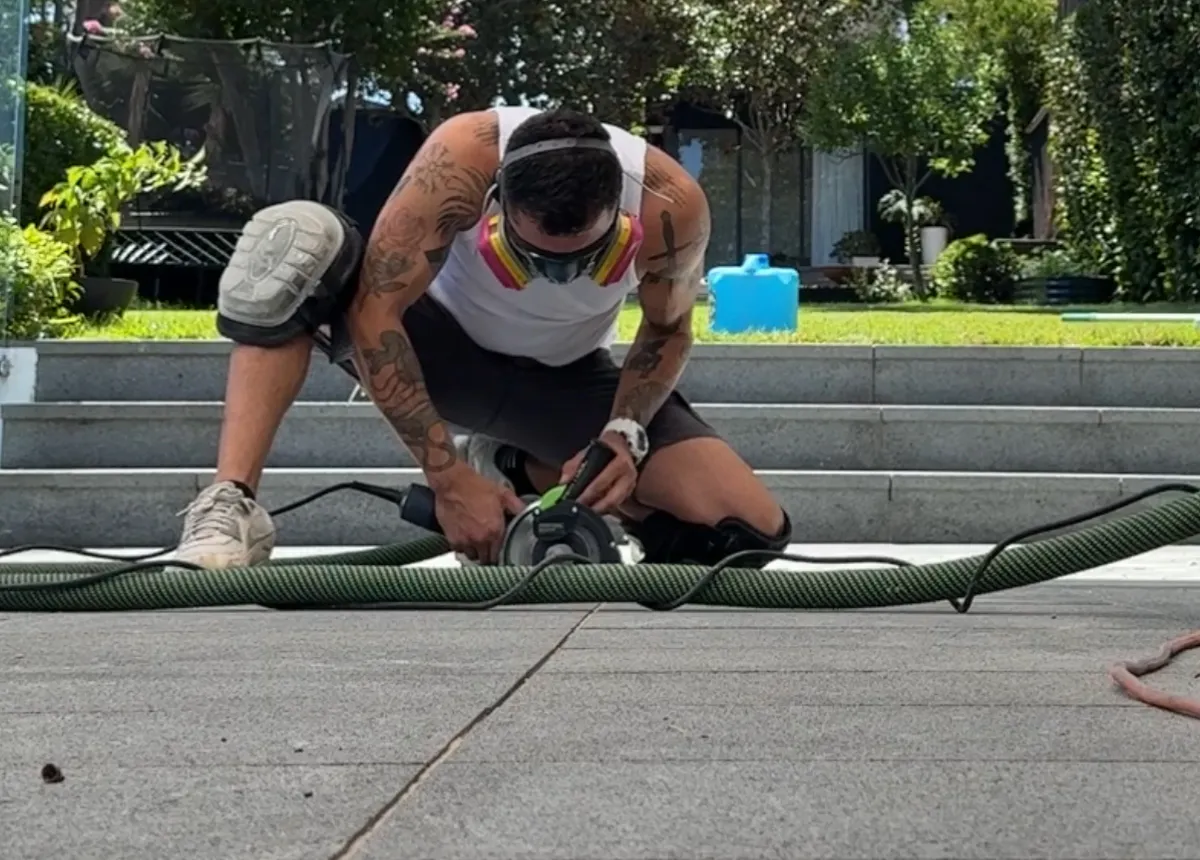
The existing grout is mechanically removed to a suitable depth, creating sufficient space for the replacement material.
Particular care is required when working with marble, limestone, travertine, and other natural stone surfaces, as the tile edges may be vulnerable to chipping or scratching.
Professional dust extraction equipment helps minimise airborne dust during grout removal.
Once the old grout has been removed, the joints are carefully cleaned and prepared for the new material.
Why Is Moisture Assessment Important Before Regrouting?
Bathrooms and showers are continuously exposed to water.
Moisture may remain within grout joints and the underlying installation even after the visible surface appears dry.
Applying new grout before the joints are adequately prepared and suitable for installation can affect the quality of the finished work.
Where accessible moisture is identified, additional drying time or investigation may be required.
Importantly, a shower's waterproofing should be provided by a properly functioning waterproofing system, not by the grout itself.
Regrouting cannot repair a failed waterproofing membrane.
Choosing the Right Grout for Your Bathroom
Different grout products offer different performance characteristics, colours, and application requirements.
At Urban Stone Restoration, we work with professional grout manufacturers including ARDEX, Mapei, and Kerakoll.
Depending on the installation, we may recommend a suitable cementitious, resin-cement, or other specialist grout.
The selected product must be appropriate for the joint dimensions, tile material, and wet-area conditions.
Can You Choose a Different Grout Colour?
Yes.
Replacing existing grout provides an opportunity to update the appearance of your bathroom without changing the tiles.
A grout colour closely matched to the tile can create a subtle, seamless appearance.
A contrasting grout colour may emphasise the tile layout and architectural design.
During our inspections, we bring professional grout colour charts so clients can explore suitable options from ARDEX, Mapei, and Kerakoll Fugabella.
Clients can choose their preferred brand and colour, subject to the product being suitable for the installation.
Should Shower Silicone Be Replaced During Regrouting?
Silicone sealant is commonly used at internal corners, wall-to-floor junctions, and other movement joints.
Over time, silicone can become discoloured, lose adhesion, or develop mould.
Where required, deteriorated silicone can be removed and replaced with a suitable high-quality sanitary silicone.
This helps achieve a cleaner appearance while maintaining the flexibility required at appropriate movement joints.
How Long Does Shower Regrouting Take?
The duration depends on the size of the bathroom, the condition of the grout, the extent of removal required, and whether moisture is present within the joints.
Some projects require multiple visits to allow adequate preparation, drying, and curing.
After installation, the new grout and silicone must be allowed to cure according to the manufacturer's instructions before the shower is used.
Do You Also Regrout Outdoor Areas?
Yes. Professional regrouting is not limited to bathrooms.
Outdoor patios, courtyards, balconies, staircases, pathways, and swimming pool surrounds can also develop deteriorated grout.
Outdoor regrouting requires appropriate material selection because the joints may be exposed to rain, temperature changes, sunlight, and other environmental conditions.
Underlying movement, drainage, and installation problems should be assessed before replacing the grout.
Professional Bathroom and Outdoor Regrouting in Sydney
Urban Stone Restoration provides professional grout removal and replacement for showers, bathrooms, natural stone floors, walls, and outdoor tiled surfaces.
We specialise in working with marble, limestone, travertine, sandstone, and other suitable tiled materials.
Our approach combines careful preparation, premium grout products, personalised colour selection, and meticulous attention to detail.
Contact Urban Stone Restoration today to discuss your regrouting project and request a personalised quotation.
If the issue is at the corners or wall-to-floor junctions, see our silicone replacement service as well.
Grout removal in practice
This example shows grout removal equipment and dust extraction on an outdoor job. It is not a bathroom before-and-after.