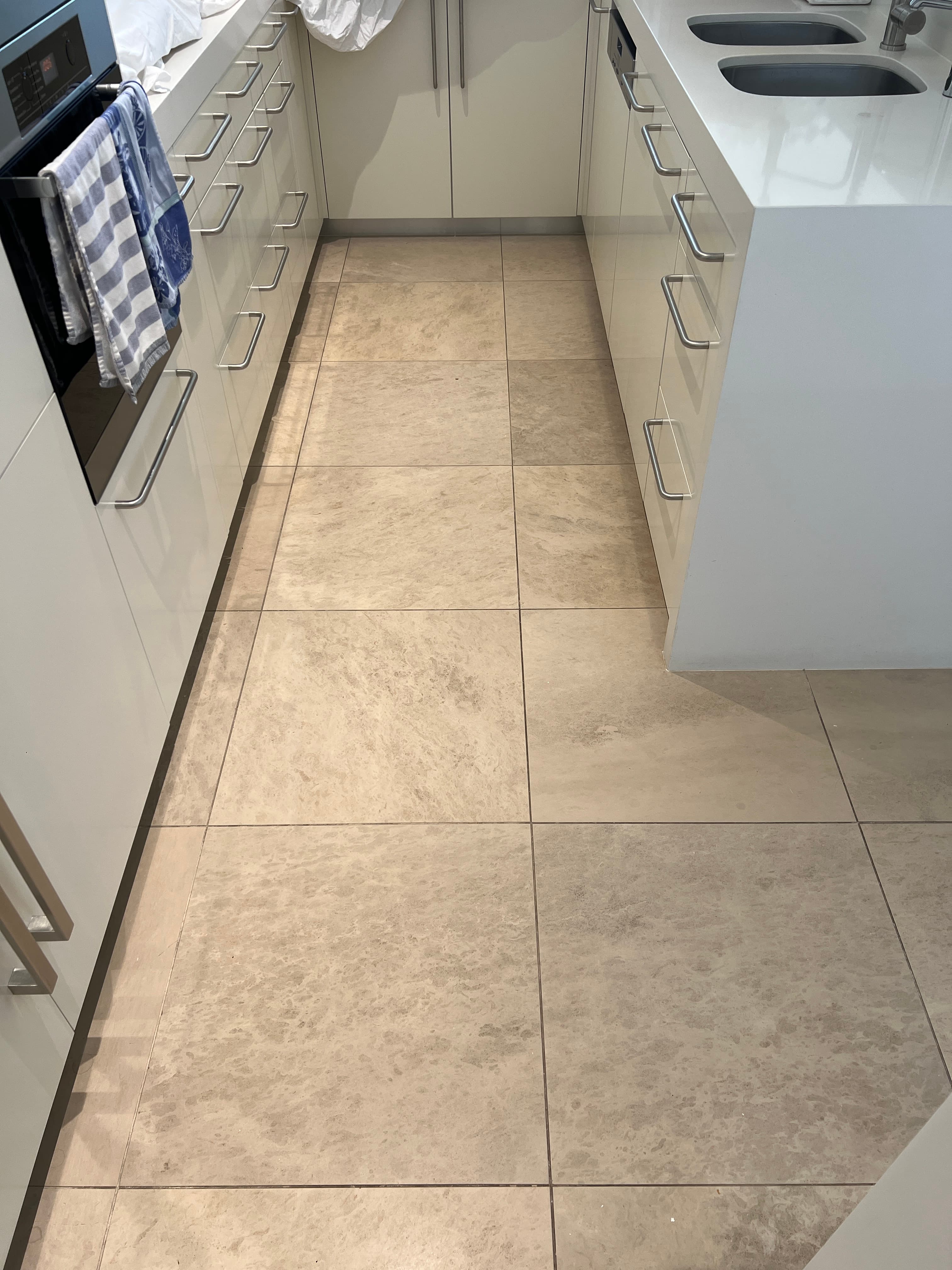
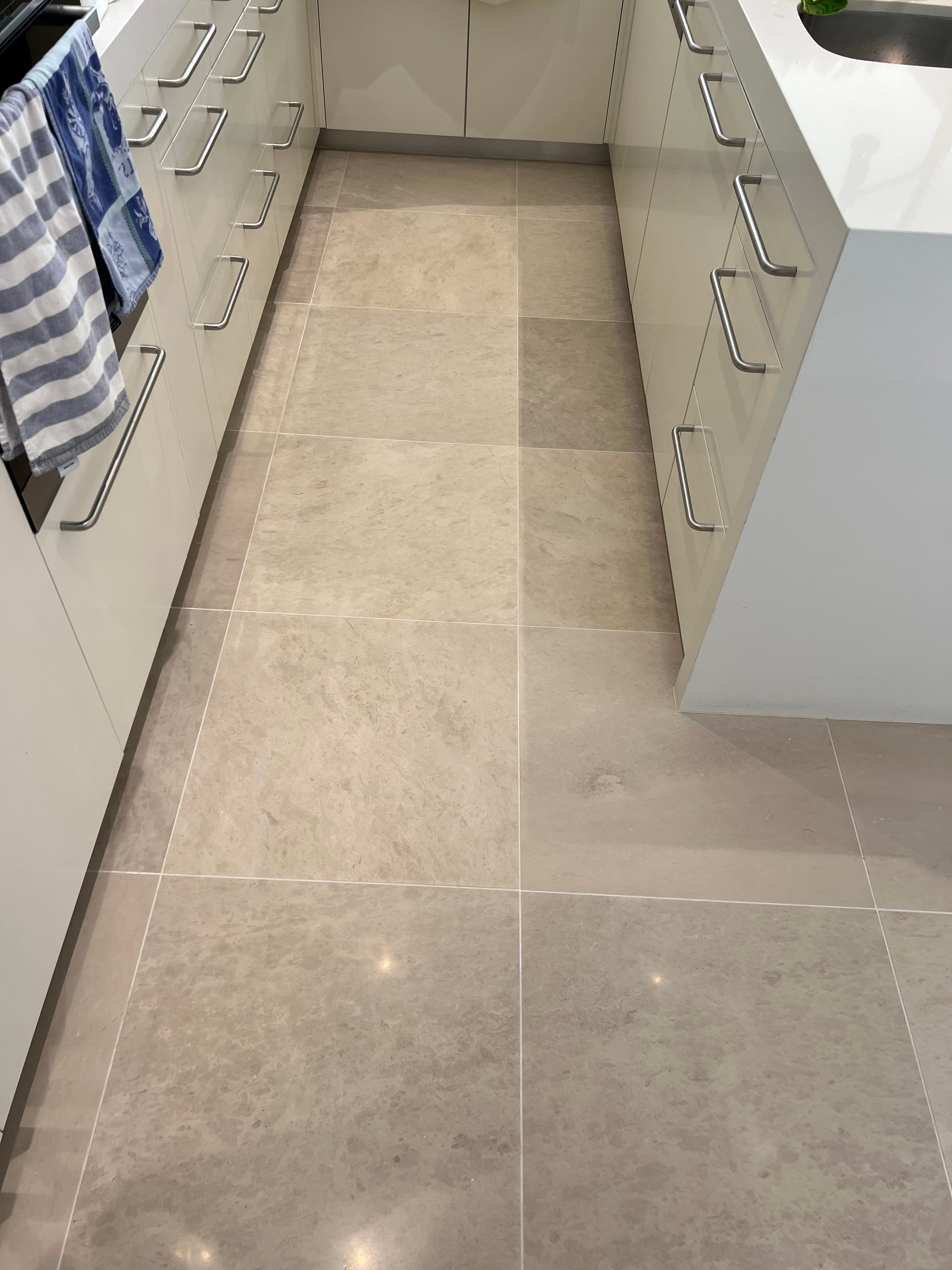
Limestone flooring is a popular choice for luxury homes due to its soft natural colours, subtle texture, and timeless appearance.
However, limestone requires appropriate cleaning and maintenance to preserve its finish and prevent unnecessary damage.
Using unsuitable cleaning products can cause etching, discolouration, and deterioration, particularly on honed or polished limestone.
This guide explains how to care for limestone floors and when professional restoration may be required.
Why Does Limestone Require Special Care?
Limestone is primarily composed of calcium carbonate.
Unlike some harder flooring materials, limestone reacts with acidic substances.
Products containing vinegar, hydrochloric acid, and other acidic ingredients can etch the surface, leaving dull or uneven patches.
Limestone is also relatively porous, although the degree of porosity varies between stone types.
This means that liquids and contaminants may penetrate the stone if they are not removed promptly.
What Is the Best Cleaner for Limestone Floors?
For regular maintenance, we recommend using a pH-neutral cleaner specifically formulated for natural stone.
Suitable products help remove everyday dirt without unnecessarily damaging the stone's finish or protective treatments.
Avoid using general-purpose bathroom cleaners, acidic tile cleaners, and abrasive cleaning products unless they are specifically approved for the limestone and application.
How to Clean Limestone Floors Properly
Step 1 – Remove Loose Dirt
Begin by removing dust, sand, and loose debris using a soft broom or a vacuum cleaner with a suitable hard-floor attachment.
Small abrasive particles can scratch limestone when dragged across the surface.
Step 2 – Use a Stone-Safe Cleaner
Dilute the pH-neutral cleaning product according to the manufacturer's instructions.
Apply it using a clean microfibre mop or another suitable non-abrasive cleaning tool.
Step 3 – Avoid Excessive Water
Do not leave large amounts of water sitting on the surface.
Use an appropriately damp mop and remove excessive moisture, particularly around joints and other vulnerable areas.
Step 4 – Allow the Floor to Dry
Allow the floor to dry naturally and avoid leaving dirty cleaning water to evaporate on the surface.
Using clean water and regularly changing mop water can help minimise residue.
Why Do Limestone Floors Become Dull?
Limestone can lose its original appearance for several reasons.
Common causes include:
- Scratches from sand and foot traffic
- Acid etching
- Accumulated cleaning product residue
- Embedded dirt and contamination
- General wear of the surface finish
If the limestone has become dull due to etching or physical wear, cleaning alone may not restore its original appearance.
Can Scratches Be Removed from Limestone?
Yes. Many scratches can be removed through professional diamond honing.
This process uses specialised abrasives to remove a controlled amount of the damaged surface layer.
The limestone can then be refined to achieve a smooth, consistent matte, satin, or suitable polished finish.
Deeper scratches may require additional restoration, depending on the condition and thickness of the stone.
Should Limestone Floors Be Sealed?
Limestone generally benefits from an appropriate penetrating sealer to help reduce water absorption and staining.
However, sealing does not prevent acid etching or physical scratching.
The need for resealing depends on the limestone's porosity, environmental exposure, and maintenance history.
When Should You Consider Professional Limestone Restoration?
Professional restoration may be appropriate when your limestone floor has:
- Visible scratches or scuff marks
- Acid etching
- Persistent discolouration
- Dull or uneven finishes
- Damaged grout joints
- Minor holes or surface damage
At Urban Stone Restoration, we provide professional limestone cleaning, diamond honing, repairs, polishing, and sealing throughout Sydney.
Our goal is to preserve the natural character of limestone while restoring its appearance using carefully selected techniques.
Contact Urban Stone Restoration for professional limestone floor restoration and maintenance advice.
Limestone restoration example