Travertine is a beautiful natural stone widely used in Sydney homes for floors, bathrooms, outdoor paving, pool surrounds, and entertaining areas.
One of its distinctive characteristics is the presence of natural holes and cavities within the stone.
While these features contribute to travertine's unique appearance, they can sometimes become larger or more visible as existing fillers deteriorate or the surface experiences wear.
Fortunately, many travertine holes and cavities can be professionally repaired without replacing the entire tile.
Why Does Travertine Have Holes?
Travertine is a form of limestone formed through the precipitation of calcium carbonate, commonly around mineral springs and other water-rich environments.
During formation, trapped gases, organic material, and mineral deposition patterns can create natural voids.
These cavities are part of travertine's natural structure.
Depending on the intended finish, manufacturers may fill the holes during processing or leave them open to create a textured appearance.
Why Do Filled Travertine Holes Reappear?
Over time, factory-applied fillers can deteriorate or become dislodged.
Several factors can contribute to this process:
- Heavy foot traffic
- General surface wear
- Deterioration of old filling materials
- Movement or damage around existing cavities
- Aggressive cleaning methods
- Environmental exposure in outdoor installations
As the filler wears away, the underlying cavity becomes visible.
In some cases, previously concealed voids may also become exposed as the surrounding surface wears.
Can Travertine Holes Be Filled?
Yes. Many holes and cavities can be repaired using professional stone repair materials.
The most appropriate filler depends on the size and depth of the cavity, the stone's colour and finish, and whether the installation is indoors or outdoors.
At Urban Stone Restoration, we select repair materials suited to the specific application.
Colour matching is an important part of the restoration process, particularly for light-coloured travertine and highly visible floor areas.
Although repairs can be made to blend closely with the surrounding stone, natural colour variations mean they may not be completely invisible.
How Are Travertine Holes Repaired?
Step 1 – Assess the Damage
The cavities are inspected to determine their size, depth, condition, and suitability for filling.
Step 2 – Clean and Prepare the Cavities
Loose material, dirt, and deteriorated filler are removed to prepare the repair area.
Step 3 – Apply the Repair Material
A suitable colour-matched stone repair product is applied to fill the cavity.
The material is selected according to the installation environment and required performance.
Step 4 – Surface Refinement
Once the repair material has cured, the surface may be mechanically refined to achieve a more consistent finish with the surrounding stone.
Where appropriate, the entire floor can also be professionally honed or polished.
Should Travertine Be Restored After Hole Repairs?
If the floor also has scratches, dull patches, acid etching, or general wear, combining repairs with professional diamond honing can provide a more consistent result.
For outdoor travertine, deep cleaning, mechanical brushing, and appropriate sealing may also be recommended.
On outdoor travertine, we don’t automatically fill every natural hole. We assess how the area is used, how it drains and whether the existing texture should be preserved, particularly around a pool.
When Is Travertine Replacement Necessary?
Some cavities may be too extensive for a straightforward repair.
If the tile is severely cracked, structurally compromised, or affected by underlying movement, replacement or additional investigation may be required.
An inspection helps determine whether restoration is appropriate.
Professional Travertine Repairs in Sydney
Urban Stone Restoration provides professional travertine hole repairs, cleaning, diamond honing, polishing, and sealing throughout Sydney.
We restore travertine floors, bathrooms, patios, pathways, and pool surrounds using methods suited to the condition and characteristics of the stone.
Contact Urban Stone Restoration to discuss your travertine repairs or request a personalised quotation.
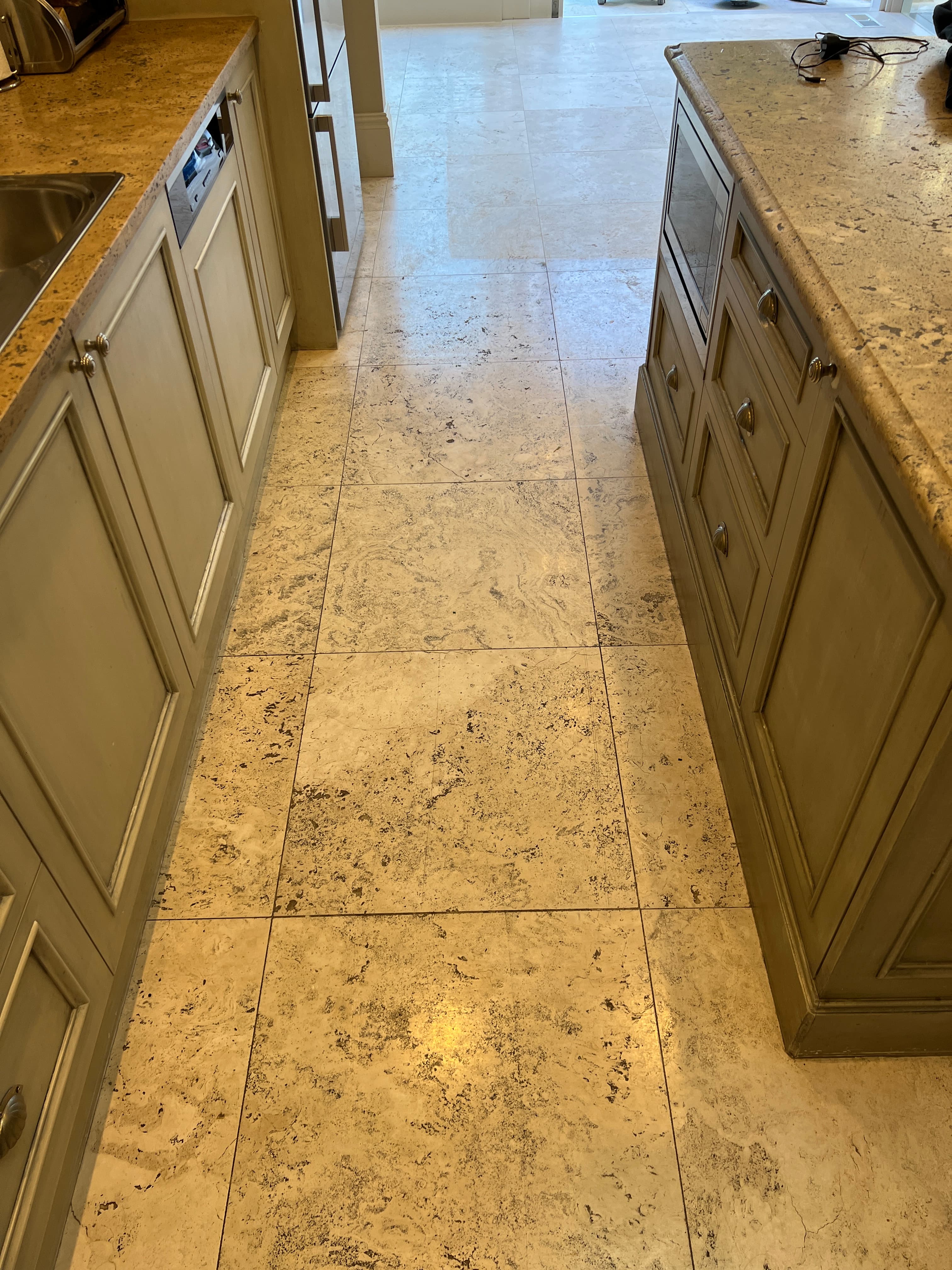
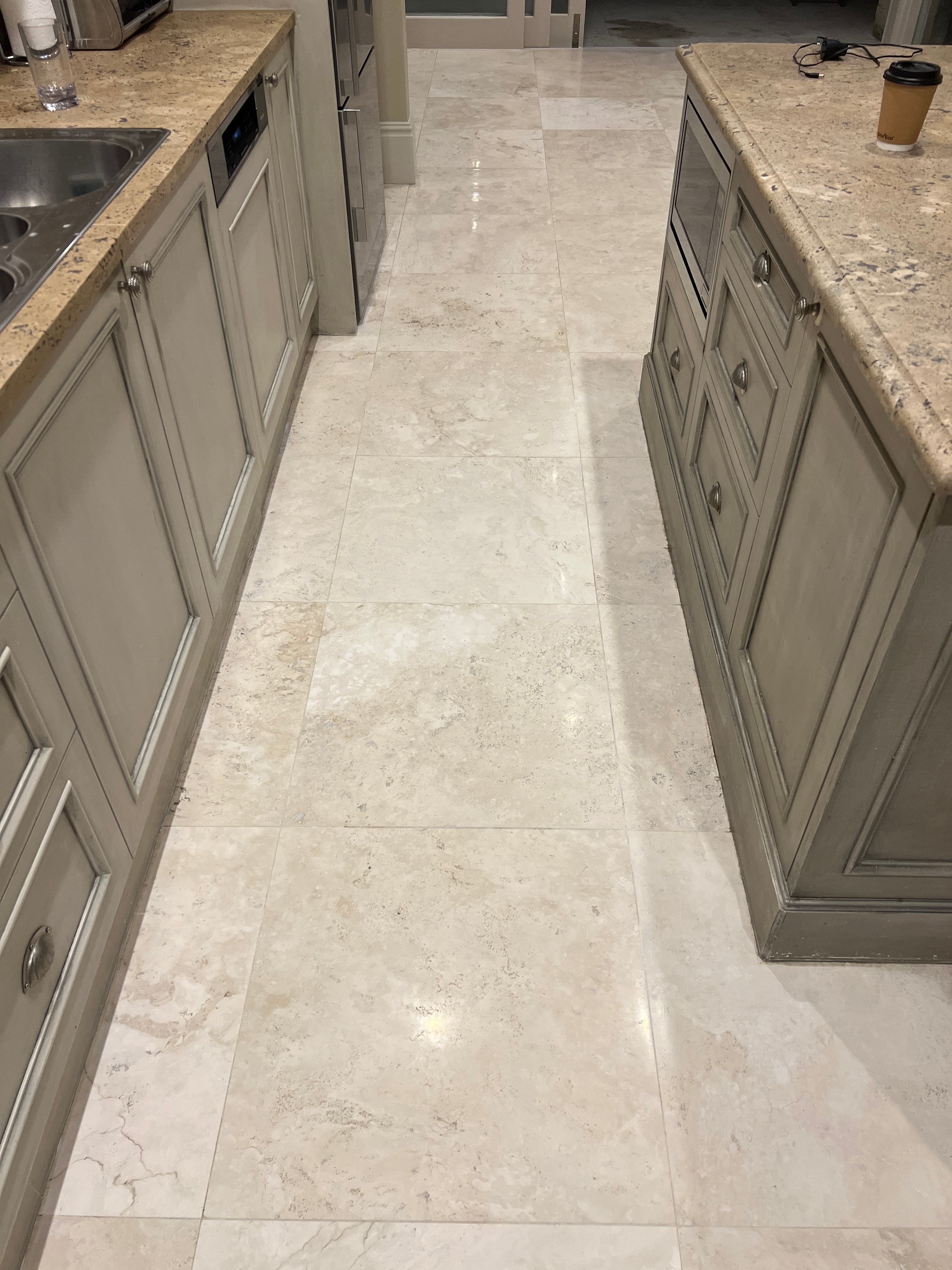
Travertine restoration example
These photos show the overall floor finish before and after restoration, not a close-up of a particular hole repair.